AI sci-fi story video generator
Give it a premise — one rule about the future that isn't true today — and get back a finished science fiction short: script, neon-lit visuals, narration, and a synth score. The genre that used to need a VFX budget now needs a sentence.
Why this format works
The premise does the work a face has to earn
One line of "what if" buys you the whole video. A good sci-fi hook is self-explaining, which is why the genre survives perfectly well with no presenter, no studio, and no personality to build first.
AI visuals are an advantage here, not a compromise
Nobody knows what a 24th-century megacity is supposed to look like, so a synthetic, slightly unreal aesthetic reads as art direction. The same look applied to a present-day kitchen just reads as broken.
One world, unlimited episodes
Establish a setting once and every video afterwards is another dispatch from it. Serialised worlds give an audience a reason to come back for the next one rather than treating each video as disposable.
The appetite is permanent
Dystopia, deep space, and "what if" are not a trend cycle — people have wanted them continuously for eighty years. A back catalogue in this genre keeps being found instead of expiring.
What comes out the other end
One prompt produces every layer of the video — you don't assemble anything.
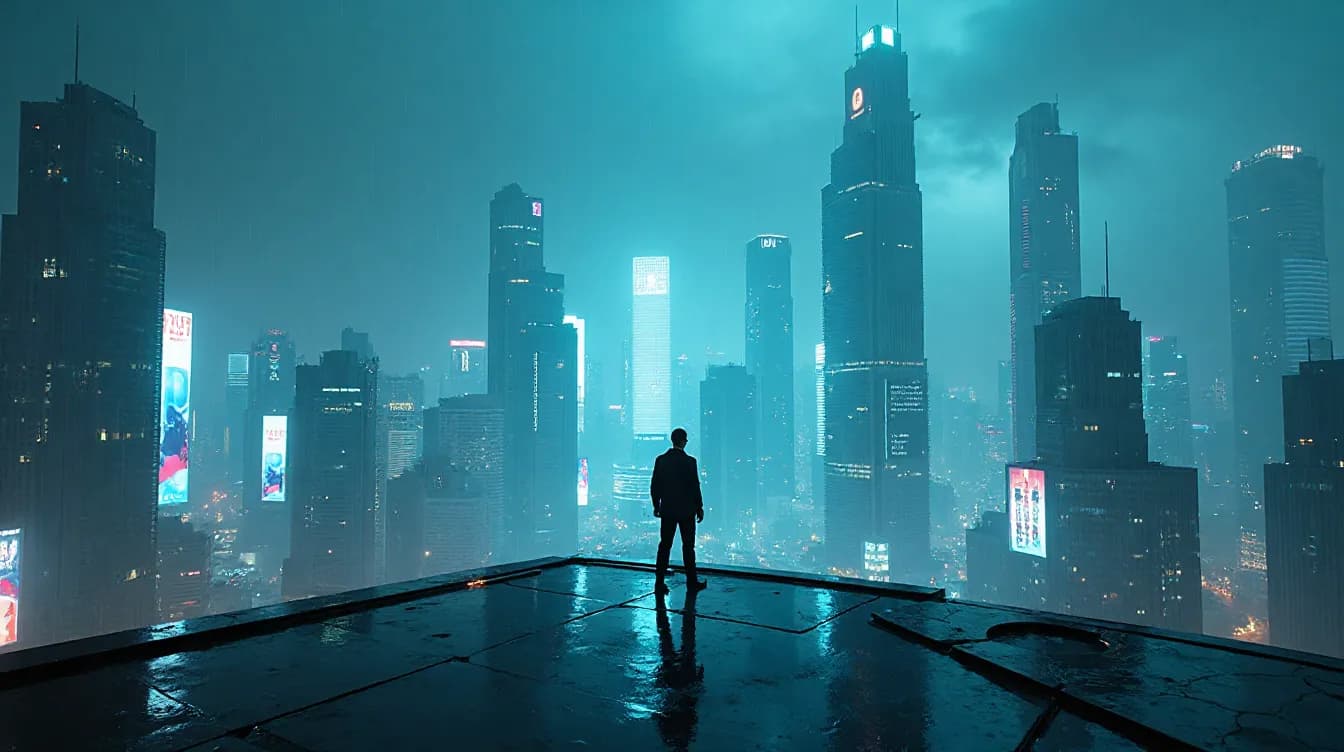
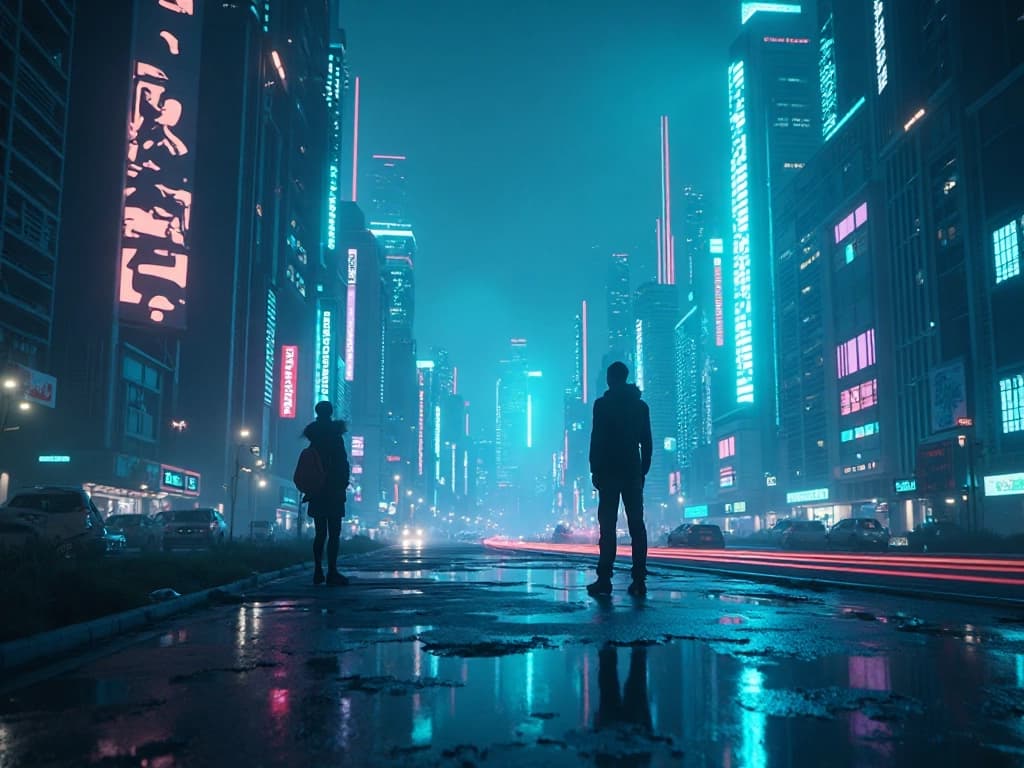
- Visuals — futuristic megacity skyline, a figure in sleek futuristic attire, neon reflections, advanced technology, holographic ambience, cool cyan and blue palette, cinematic cyberpunk mood, polished surfaces
- Narration — cold, precise, futuristic, technical
- Score — synthwave, electronic, ambient space, tense
- Sound design — spaceship hum, laser, computer beeps, wind
Making them actually land
State the world's one rule immediately
The viewer needs to know the constraint in the first sentence. Confusion is the fastest scroll in this genre — not boredom. Say what's different about this world before you show anyone in it.
One idea per video
Resist stacking three concepts into one short. A single clean premise, followed all the way through, is what gets quoted in the comments. Three is what gets forgotten.
Keep the technology vague, the consequence concrete
Never explain how the machine works — you don't have the runtime and nobody asked. Show precisely what it costs one specific person. That's the whole trick of short science fiction.
Match the format to the ambition
Vertical for TikTok and Shorts if you want reach. But sci-fi is one of the few niches where the 16:9 YouTube format and a longer runtime genuinely pay off — world-building needs room, and this audience will sit through it.
Prompts to steal
Paste any of these in as-is — each one is a complete starting point.
Memory is taxed by the hour, and the poorest citizens can only afford to remember the last three days of their lives.
A deep-space relay station receives a distress call in its own operator's voice, timestamped nine years from now.
Every citizen is issued the exact date of their death at birth. A records clerk finds a file where the date has been edited.
Humanity's first interstellar probe returns after two centuries — eleven years early, and measurably heavier than when it left.
Your first one takes about a minute
No editing software, no camera. The Sci-Fi style is included on every paid plan, from $20/month — the free plan covers the Mystery, Kids, Medieval and Fantasy styles.